
“At New Directions College, as well as academic excellence, we believe education should inspire curiosity, critical thinking and care for the world around us.”
By embracing sustainability as a whole-institution commitment, we are embedding it into the heart of our culture, curriculum, campus and community relationships.
But what does that look like in practice and how can you get involved?
We generate about 30% of our electricity from the solar panels on the roof with the rest coming from renewable sources. Heat is provided by gas boilers. Over time these will be replaced by a low or zero carbon heat source (for example Air Source Heat Pumps, ASHPs), as part of Reading Borough Council’s wider decarbonisation programme.
A lot of focus is rightly placed on decarbonising the college’s heating and lighting, but we’re also looking at ways to reduce waste, increase recycling (including of waste) and encourage more learners and staff to use public transport, cycle or walk. The college is on a bus route, and a fair number of students already regularly arrive by bicycle. We’re also beginning to talk about the impact of what we buy: how far does it have to travel, what is the environmental impact, how are the people making goods treated, is there a circular alternative?
There is certainly more that we can do. But this is a journey! We’re learning as we go.
There are lots of ways that you can help the college save energy, cut carbon and avoid waste, including things like turning off lights, reminding yourself and friends of what can and cannot be recycled and, if you drive to college, perhaps considering leaving the car at home sometimes – walking, cycling or using the bus to get to college instead.
As a college we also need to do the bigger, bolder things too. Like changing the way that we heat the building and increasingly looking for products that are designed to be circular – reused, remade or recycled rather than sent to waste when they come to the end of their life.
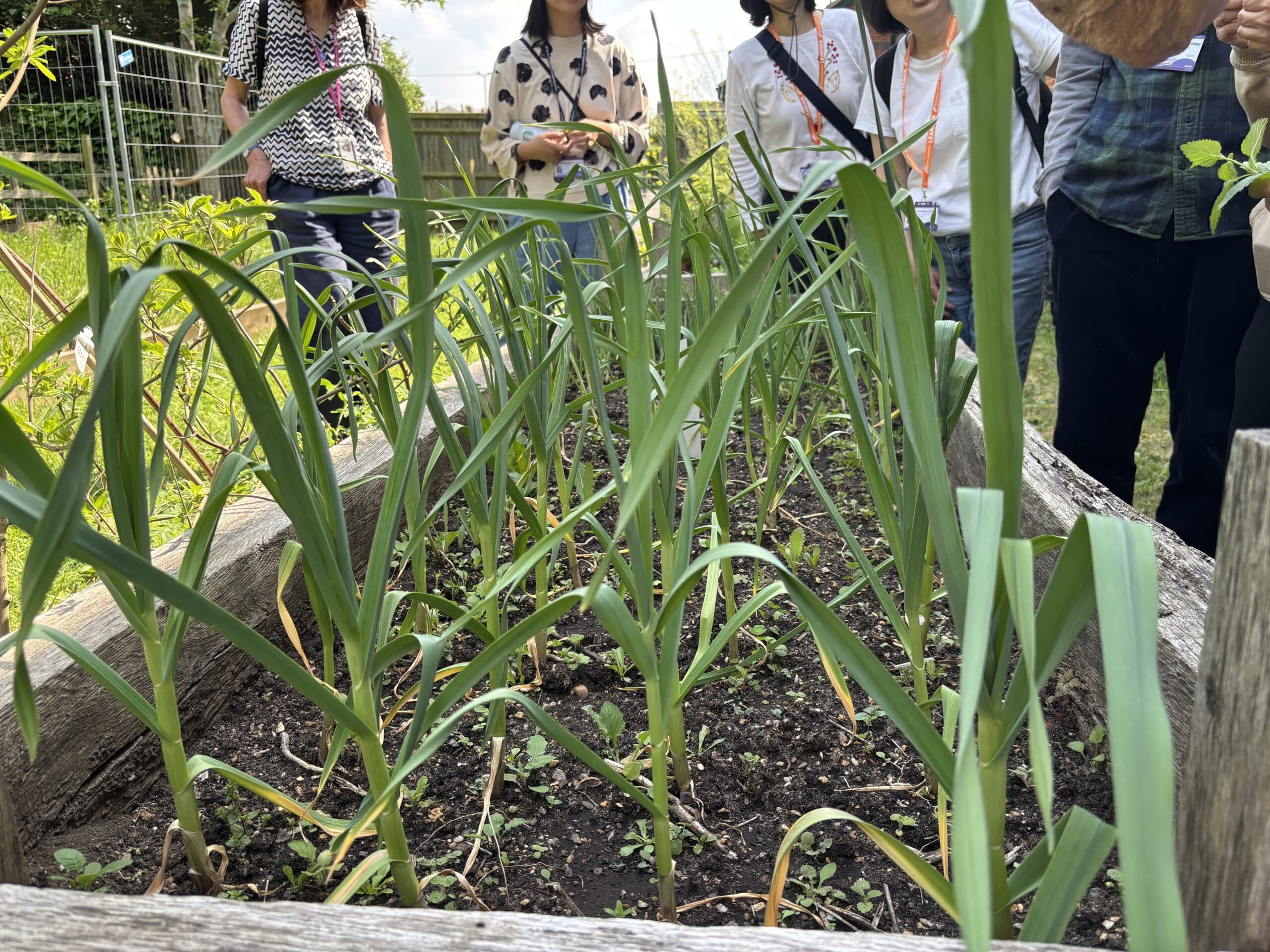
Work has already started on breathing life back into the college garden. You may already have spent some time in the garden as part of classes or volunteered to help during one of our ‘guerilla gardening’ sessions last year. The aim is to create a thriving green space that quickly becomes a cornerstone of the college’s sustainability efforts. We’ll be growing food in the garden, including planting a small food forest, as well as wildflowers and a few ornamental flowers. We also want it to be a space where learners, staff and other wildlife can enjoy just hanging out and being outside.
Another important facet of the garden is the way it links the college with other gardens and growing spaces across Reading and creates opportunities for new connections and partnerships.
Initiatives to make the college more sustainable are a regular topic of discussion at Learner Assembly meetings. And the college is about to establish a staff Sustainability Champions Group. Looking to the year ahead we’re keen to identify at least two cross-college sustainability events, working with the Learner Assembly and Sustainability Champions Group.
In today’s world, learning that helps people thrive goes beyond the boundaries of individual subjects to explore how our lives intersect with broader environmental and social systems.
In response to this challenge, teachers across the college are experimenting with the best way to embed sustainability, both individually and as curriculum teams. The goal is that every subject is taught with sustainability naturally embedded. For those students (and staff) wanting to take their interest in sustainability further, we’re exploring what additional experiences and courses we might offer.
The college is also working towards becoming a Carbon Literate Educator, which involves offering Carbon Literacy courses for both students and staff. In addition, there are all the opportunities for nature-based learning offered by the college garden.
As a place-based institution we naturally look for opportunities to make local connections, share our learning and collaborate for greater impact. The college already works closely with a range of local partners to promote courses, offer targeted support, enrich learning and provide work experience. We plan to build on, and extend, these relationships to support sustainability learning both within and beyond the college, including working with suppliers and community delivery partners.
You can read our full sustainability strategy and download a summary of our college action plan here:
New Directions College Sustainability Strategy 2026 – 2029
Summary of college action plan 2026 – 2027
We’re also pulling together data for a ‘sustainability dashboard’, which will be available shortly, and will publish a short end of year report on progress in delivering our strategy. Watch this space.